
GigSmart Get Gigs
GigSmart, Inc.Business
3.63.03K Reviews
- Version
- 4.31.0
- Installs
- 1.00M
- Age Rating
- Everyone
Screenshots
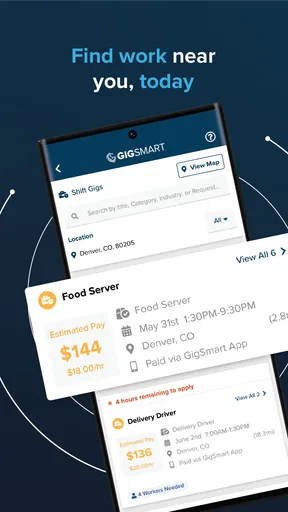
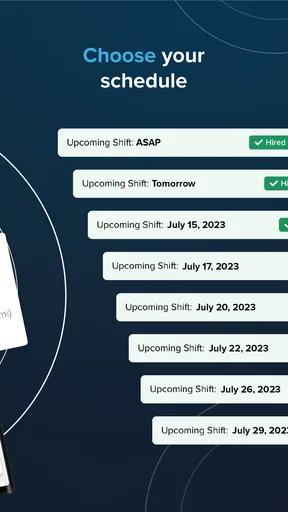
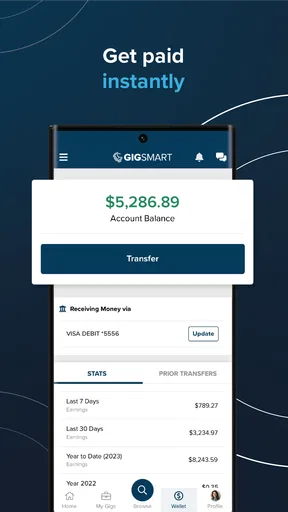
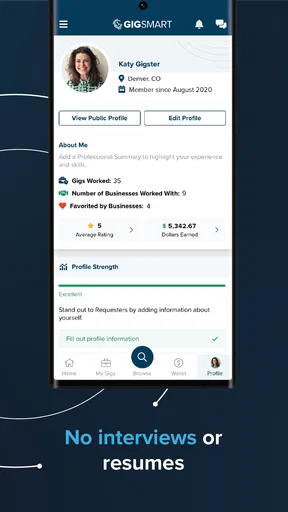
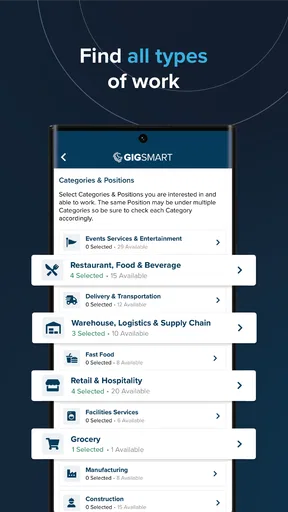
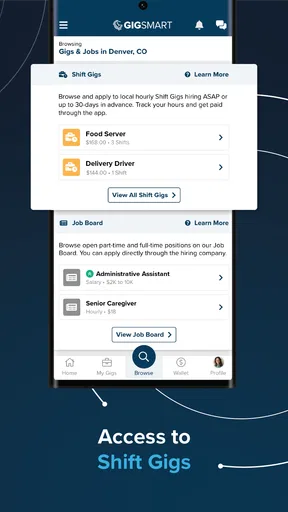
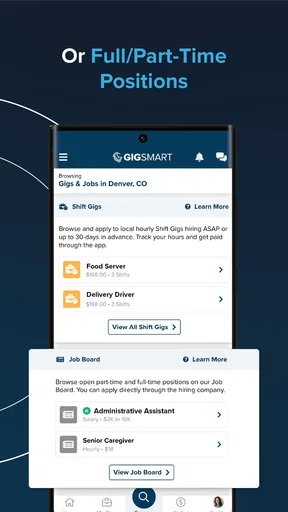
Our Review of GigSmart Get Gigs
 Analysis by Appyee
I approached GigSmart Get Gigs as a practical job-finding tool rather than another general employment board. The idea is straightforward: connect people who want flexible work with local opportunities through a phone. That makes it especially interesting for anyone trying to fill gaps between regular shifts, find short-term work nearby, or start earning without committing to a conventional full-time application process.
My overall impression is positive but measured. The app can make local gig hunting feel more immediate than searching through broad career websites, yet that convenience comes with trade-offs. The quality and usefulness of the experience depend heavily on the jobs available in your area, how quickly you respond, and whether the work style suits you. I would recommend trying it if flexibility matters more to you than a predictable schedule, but I would not treat it as a guaranteed replacement for stable employment.
What using GigSmart feels like today
GigSmart, developed by GigSmart, Inc., is a free business app for people looking for local work. Its current version is 4.31.0, and it runs on Android 7.0 or later. The app is rated for Everyone, which fits its broad audience, although the actual suitability of any listed job still depends on the task, location, schedule, and employer requirements.
The strongest part of the concept is the focus on immediacy. Instead of building a long application around a permanent position, I can use a gig marketplace to look for work that fits a particular day or short period. That is useful when my availability changes from week to week. A student with open afternoons, a person between jobs, or someone who wants occasional extra income may find this approach more practical than browsing traditional listings.
There is also a psychological advantage to a focused gig app. On a conventional job site, temporary work can get buried among permanent roles, lengthy descriptions, and applications designed for office careers. Here, the purpose is clearer: I am checking for nearby opportunities that may be relevant to my immediate schedule. That narrower purpose saves time when I already know I am looking for flexible work rather than a long-term career move.
Still, I would not open the app expecting a constant stream of ideal offers. Local availability is the central variable. Someone in a busy area may see a useful selection, while another person may find fewer suitable options. A gig marketplace is not equally valuable everywhere, and no interface can fully solve that supply problem. I would judge the app after checking it across several days and different times, not after one quiet search.
The audience size suggests that the service has reached a substantial group of users: it has passed one million installs, with an average rating of 3.6 from roughly 7,100 ratings and about 3,000 written reviews. I see that rating as a reason to keep expectations realistic. It indicates that many people find the app useful, but the experience is not universally smooth or equally satisfying for everyone.
A realistic way I would use it
Imagine I have a regular job with an unpredictable rota and want to earn extra money on a free Saturday. I would first check the local listings rather than planning my entire week around the app. I would compare the location, timing, duties, and expected commitment of each opportunity, then only choose work that I can realistically reach and complete. That last step matters: a gig that looks attractive until travel time and preparation are included may be poor value in practice.
I would also keep a simple personal record of the work I accept. Writing down the date, location, expected duties, arrival instructions, and payment details helps avoid confusion later. This is one of the less obvious habits that makes a flexible-work app more useful. The app can help me discover an opportunity, but I still need to manage my own schedule and make sure the practical details fit.
Another useful approach is to treat early use as a trial period. Rather than accepting every available job, I would begin with opportunities that have clear requirements and manageable travel. That gives me a better sense of whether the local listings match my abilities and whether the app’s workflow suits me. It also reduces the risk of accepting work that looks simple but involves more time or effort than expected.
What the recent version means for existing users
The current release gives the app a clear present-day reference point: version 4.31.0 is the build users should expect when installing it on a compatible Android device. For someone returning after a long break, that is useful because the product has continued to move beyond its original launch. GigSmart first appeared on November 28, 2018, so this is not a brand-new experiment trying to prove that gig work belongs on a phone.
That history matters, but I would separate confirmed product maturity from assumptions about future improvements. A newer version can indicate ongoing maintenance and refinement, yet it does not automatically mean that every frustration has disappeared. Existing users should still evaluate the current workflow on its own terms: how easy it is to find relevant jobs, how clearly each opportunity is presented, and how well the app fits their local market.
For returning users, the best way to reassess the app is to revisit the entire process instead of focusing only on visual changes. Search for the kinds of work you actually want, inspect the practical information before committing, and notice whether the app helps you decide quickly. The real measure of an update is not simply that the version number changed; it is whether the path from opening the app to making a sensible work decision feels less confusing.
I also recommend keeping the app updated through the normal store process. That is not because every update will transform the experience, but because an older installation can create avoidable friction in any service that relies on current account and job information. The important point is to view version 4.31.0 as the current baseline, not as proof that the app will work identically for every person or region.
Where it beats ordinary job boards
GigSmart has a different rhythm from a traditional employment website. A conventional board is usually better when I want to build a long-term career path, compare permanent openings, upload a polished résumé, or communicate with an employer through a more formal recruitment process. It gives me a broader view of the market, especially for salaried roles and positions where qualifications and progression matter.
This app is more appealing when the question is, “What can I do soon that fits my availability?” That distinction is important. I would choose it over a general board when I have a free block of time, want local work, and do not want to spend hours applying for roles that may take weeks to process. The shorter decision cycle can be a genuine advantage.
On the other hand, a local classified service may offer more variety in informal work, while a specialist platform may be stronger for one profession, such as driving, design, tutoring, or technical contracting. GigSmart’s value sits between those extremes: it is more focused than a general classifieds page, but it should not automatically be considered the best tool for every occupation.
There is also a trade-off between speed and control. A quick gig marketplace can reduce the effort needed to discover work, but it may provide less of the long-term context I would want before choosing a permanent employer. I would use GigSmart for flexibility and a traditional job site for stability, career development, and a deeper comparison of companies.
Small workflow choices that make a difference
The first practical tip is to search with a real travel boundary in mind. “Local” is not the same as “convenient.” I would calculate the complete journey, including the return trip, before accepting anything. A nearby-looking opportunity may become unattractive if public transport is limited or if the start time makes the commute difficult.
The second is to read every requirement as a commitment rather than a suggestion. Temporary work can sound simple in a short listing, but the actual task may require specific clothing, physical effort, punctual arrival, or preparation. I would only accept a gig after checking that I can satisfy those conditions without rearranging other responsibilities.
The third is to use the app as a scheduling aid, not merely a search box. I would compare opportunities against existing shifts, appointments, and recovery time. Accepting several short jobs can create a surprisingly long day once travel and waiting are included. The flexibility is valuable only when I remain selective.
A fourth insight is that response speed should not replace judgment. Flexible listings may encourage quick decisions, but rushing can lead to avoidable cancellations or a poor match. I would prepare basic information about my availability and experience in advance, then use that preparation to respond carefully rather than impulsively.
Finally, I would separate gross earning potential from actual value. Even when an opportunity appears worthwhile, transport, meals, equipment, and unpaid time can change the calculation. GigSmart helps me find work, but it does not remove the need to budget. That is particularly important for people using the app as a regular income supplement instead of occasional pocket money.
Who will benefit most, and who should skip it
I think the app is best suited to people who can adapt quickly. Students, part-time workers, freelancers between projects, and people with changing availability may appreciate being able to look for short-term local opportunities without presenting every search as a permanent career decision. It can also suit someone testing different kinds of work before deciding which direction to pursue.
It may be less suitable for someone who needs a guaranteed number of hours or a fixed payday pattern. The app’s central appeal is flexibility, and flexibility usually means less certainty than a regular contract. If missing a week of work would create a serious financial problem, I would use this only as a secondary option while maintaining a more dependable source of income.
I would also be cautious if I dislike making logistical decisions. Gig work can require more personal organization than a normal shift arrangement. I need to monitor opportunities, judge travel, protect my availability, and keep track of commitments. Someone looking for an employer to provide a stable routine may feel more comfortable with a conventional role.
The same applies to people whose skills are highly specialized. A specialist professional network may offer better matching, stronger portfolios, and more meaningful career progression. GigSmart makes more sense when the desired work is compatible with local, flexible assignments rather than a narrowly defined professional search.
Friction points I would not ignore
The biggest limitation is not necessarily the app interface; it is the uneven nature of gig availability. A polished search experience cannot guarantee that the right work exists nearby at the right moment. This means the app may feel excellent during a productive week and disappointing during a quiet one.
There is also a difference between finding an opportunity and finding a good opportunity. I would not measure success by how many listings I can browse. The useful question is whether the available jobs match my schedule, abilities, travel limits, and income needs. If several listings fail one of those tests, the app may still be functioning normally while offering little practical value to me.
Another source of friction is the responsibility placed on the worker. Flexible work can be empowering, but I have to make more decisions myself than I would with a standard employer. That includes deciding which commitments are realistic and protecting enough time to complete them properly. People who underestimate that responsibility may blame the app for problems caused by overbooking or weak planning.
The average rating of 3.6 reflects this mixed picture better than an unqualified recommendation would. I read it as a signal to approach the service with a specific goal and realistic expectations. It is worth testing, but I would not build an entire financial plan around it before seeing what the local market actually provides.
Privacy, payment expectations, and practical preparation
Because this is a work platform, I would pay close attention to the information requested during account setup and the details attached to each opportunity. Before committing, I want to understand what the task involves, where it takes place, when I must arrive, and how the payment process is described in the app. Clear information reduces the chance of accepting work based on an incomplete impression.
I would also avoid treating the phrase “paid fast” as a promise that every personal situation will be identical. The app’s store summary presents quick payment as part of its appeal, but real timing can depend on the work arrangement and the steps required after completion. I would check the specific terms shown for an opportunity and keep my own record until the payment has arrived.
That record is especially useful when I accept multiple gigs. I would note the agreed task, location, start time, completion status, and payment outcome. This is not glamorous, but it gives me a clear history and makes it easier to spot whether the app is genuinely helping me earn efficiently or merely keeping me busy searching.
What I would watch as the app continues to evolve
For future versions, I would watch for improvements that make local matching more precise rather than simply adding more listings. Better clarity around schedules, duties, travel practicality, and payment expectations would have a direct effect on whether users can make good decisions quickly. Those are the details that turn a gig marketplace from a list of possibilities into a dependable work tool.
I would also look for signs that the experience is becoming more useful for repeat users. Someone who returns regularly should be able to spend less time filtering unsuitable opportunities and more time evaluating realistic ones. Any progress in that direction would matter more to me than cosmetic changes.
At the same time, I would not assume that a future release will solve the basic uncertainty of local gig work. Availability will still vary by place and timing, and users will still need to judge whether an opportunity is worth the total effort. Product evolution can improve the process, but it cannot remove the need for personal planning.
For now, I see GigSmart as a credible tool to test when I want flexible local work and need an alternative to ordinary job boards. It is free, broadly accessible on supported Android devices, and established enough to have more than one million installs. Those points make it easy to try, but they are not reasons to accept every listing or expect guaranteed income.
My recommendation is to use it strategically: check it when your availability is clear, compare the full practical cost of each gig, and keep another employment option if you need dependable hours. The app is most valuable when it gives you flexibility without making you surrender your judgment. If that balance matches what you need, GigSmart is worth adding to your job-search routine; if you want stability, specialized career matching, or a predictable schedule, a different type of employment service will probably serve you better.
Verdict
Strengths of GigSmart Get Gigs
- Flexible shifts let you choose work that fits your schedule.
- Wide range of gigs across events, hospitality, retail, and more.
- In-app applications make finding and accepting jobs convenient.
- Clear gig details help you compare pay, location, and requirements.
- Useful for earning extra income without committing to one employer.
Limitations of GigSmart Get Gigs
- Gig availability varies greatly by city and season.
- Some roles may require transportation, equipment, or specific experience.
- Competition can make popular gigs difficult to secure.
- Earnings may fluctuate because work is generally temporary.
- Payment timing and eligibility can depend on completed shift verification.
Similar Picks in This Category
View All
LinkedIn: Community & Network
LinkedIn3.8

Zoom Workplace
zoom.com4.1

Microsoft Teams
Microsoft Corporation4.6

Meta Business Suite
Meta Platforms, Inc.4.6

Webex Meetings
Cisco Systems, Inc.4.5

TeamViewer Remote Control
TeamViewer4.4
Frequently Asked Questions
What is GigSmart Get Gigs, and how does it work?
GigSmart Get Gigs is a mobile marketplace that connects workers with businesses and individuals offering short-term, flexible jobs. After creating a profile, you can browse available gigs, review the requirements, pay details, location, and schedule, then apply for suitable opportunities. Depending on the listing, some jobs may require approval, screening, or additional verification before you can accept them.
What types of jobs can I find on GigSmart Get Gigs?
The available work can vary by location, season, and local business demand. Listings may include event staffing, warehouse and moving assistance, delivery-related work, cleaning, hospitality, retail support, general labor, and other temporary assignments. Before applying, carefully check the job description, required skills, physical demands, transportation expectations, working hours, and payment information because not every gig is suitable for every worker.
How do I get paid for gigs completed through the app?
Payment details depend on the specific gig and the agreement shown in the listing. The app generally provides information about the expected rate or total compensation, while payment may be processed through GigSmart or according to the employer’s stated method. Make sure your account and payment details are accurate, complete all required check-in or completion steps, and review the payment timeline before accepting a job.
Is GigSmart Get Gigs safe and trustworthy for workers?
GigSmart includes features intended to help workers evaluate opportunities, such as employer information, gig details, ratings or reviews where available, and in-app communication. However, users should still exercise normal caution. Confirm the location and employer, avoid sharing unnecessary personal information, communicate through the platform when possible, and do not accept assignments with unclear duties, suspicious payment requests, or unsafe working conditions.
What should I know before downloading and using GigSmart Get Gigs?
The app is most useful for people seeking flexible, short-term work and who are comfortable checking listings frequently because opportunities can change quickly. You may need to provide personal, employment, identity, or payment information during registration or verification. Availability depends heavily on your area, and some gigs may have specific transportation, experience, age, or background-check requirements, so review the terms and privacy policy before signing up.
